By Dr. Jiawei Lu
Head of Bioconjugation Discovery Services
About the Author
Dr. Jiawei Lu has over ten years of experiences in bioconjugation discovery. At WuXi XDC, he is responsible for building a first-class discovery bioconjugation services empowering platform. His team has extensive experiences in conjugation, purification, and characterization of various types of conjugates. In the past 10+ years, his team has successfully advanced 90+ lead molecules from discovery to CMC. Dr. Lu obtained his PhD degree from the Chinese Academy of Sciences and had a postdoctoral training from the Scripps Research Institute.
Antibody–oligonucleotide conjugates (AOCs) represent an emerging therapeutic modality that combines the cell-targeting specificity of antibodies with the genetic modulation capabilities of oligonucleotides. By selectively delivering oligonucleotide payloads to disease-relevant cells, AOCs have the potential to expand the reach of nucleic acid therapeutics to tissues and cell types that have been difficult to target systemically. Current applications include gene silencing, exon skipping, and other forms of RNA modulation, with potential applications across genetic, neuromuscular, metabolic, and oncology indications.
Key Biological, Molecular and Manufacturing Challenges for AOC Development
As the AOC field matures, it is clear that no single factor will determine the success of an AOC. Developers must address a combination of biological, molecular, and manufacturing challenges, ranging from cell-specific targeting and intracellular trafficking to payload release, molecular stability, conjugation control, and scalable manufacturing.
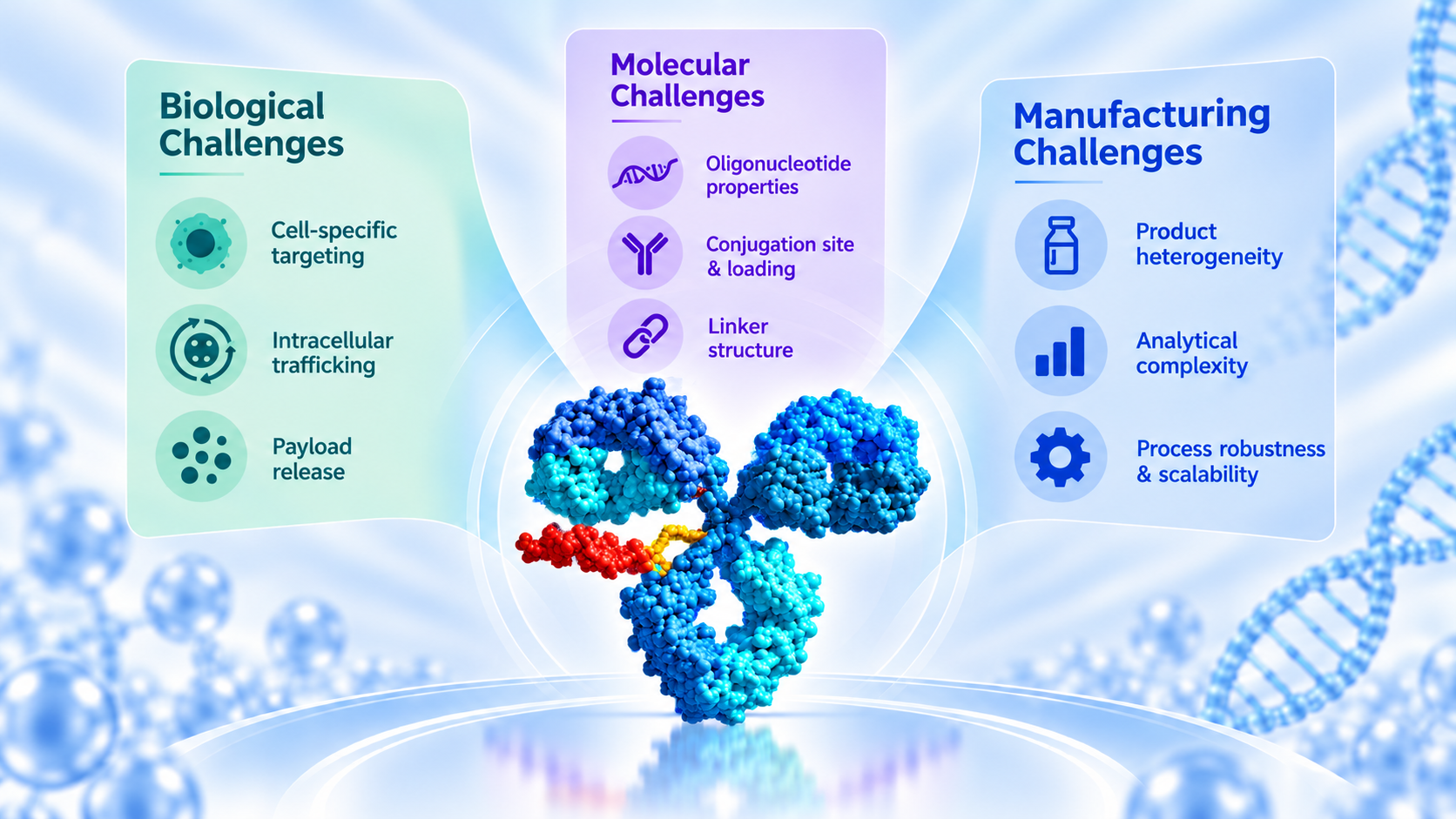
Key Biological, Molecular, and Manufacturing Challenges in AOC Development
Achieving productive intracellular delivery represents a major biological bottleneck and requires overcoming multiple biological barriers. Following receptor-mediated uptake, AOCs enter the endosomal pathway, where oligonucleotide payloads can become trapped or degraded. Endosomal escape and intracellular release are therefore critical for translating cellular uptake into functional activity.
At the same time, the unique properties of oligonucleotides create additional molecular and manufacturing challenges. Oligonucleotides are relatively large and highly negatively charged, and their physicochemical properties can influence conjugate stability, antibody behavior, cellular trafficking, pharmacokinetics, and payload activity. Variations in conjugation site, oligonucleotide loading, and linker structure can therefore affect both biological performance and product quality.
In this respect, AOCs are beginning to resemble the ADC field in its earlier stages, when heterogeneous conjugation and variable payload loading presented significant challenges for product consistency and development. The evolution toward site-specific conjugation and more sophisticated linker technologies demonstrated that bioconjugation is not simply a manufacturing step—it is an integral part of molecular design.
For AOCs, the linker and conjugation strategy must simultaneously support stability in circulation, appropriate intracellular release, biological activity, and manufacturing robustness.
Addressing Core AOC Molecular Barriers through Precision Conjugation and Rational Linker Design
Building on these learnings, advances in site‑specific bioconjugation and rational linker design directly mitigate key molecular‑level risks for AOC constructs.
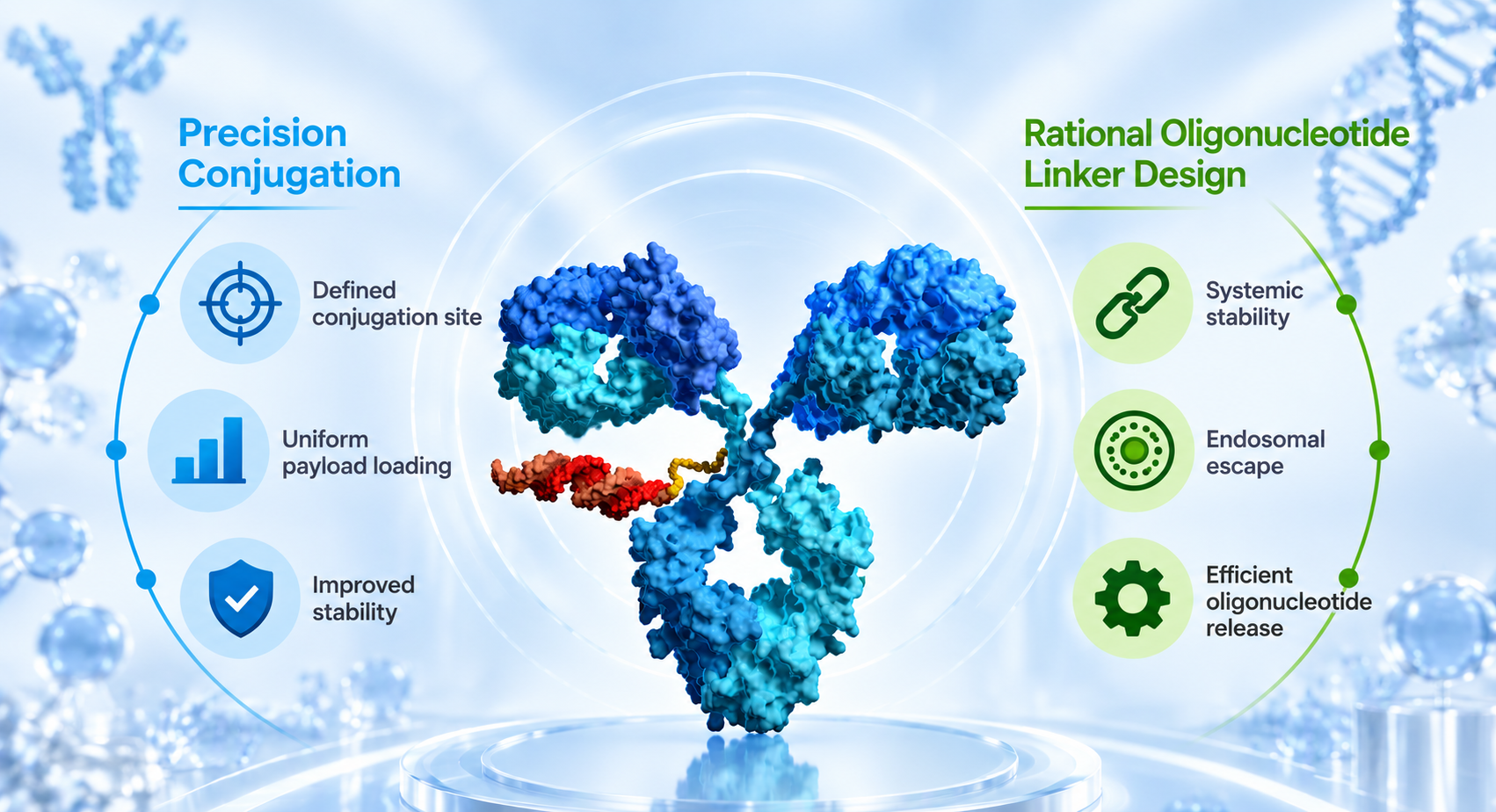
Addressing AOC Molecular Barriers through Precision Conjugation and Rational Linker Design
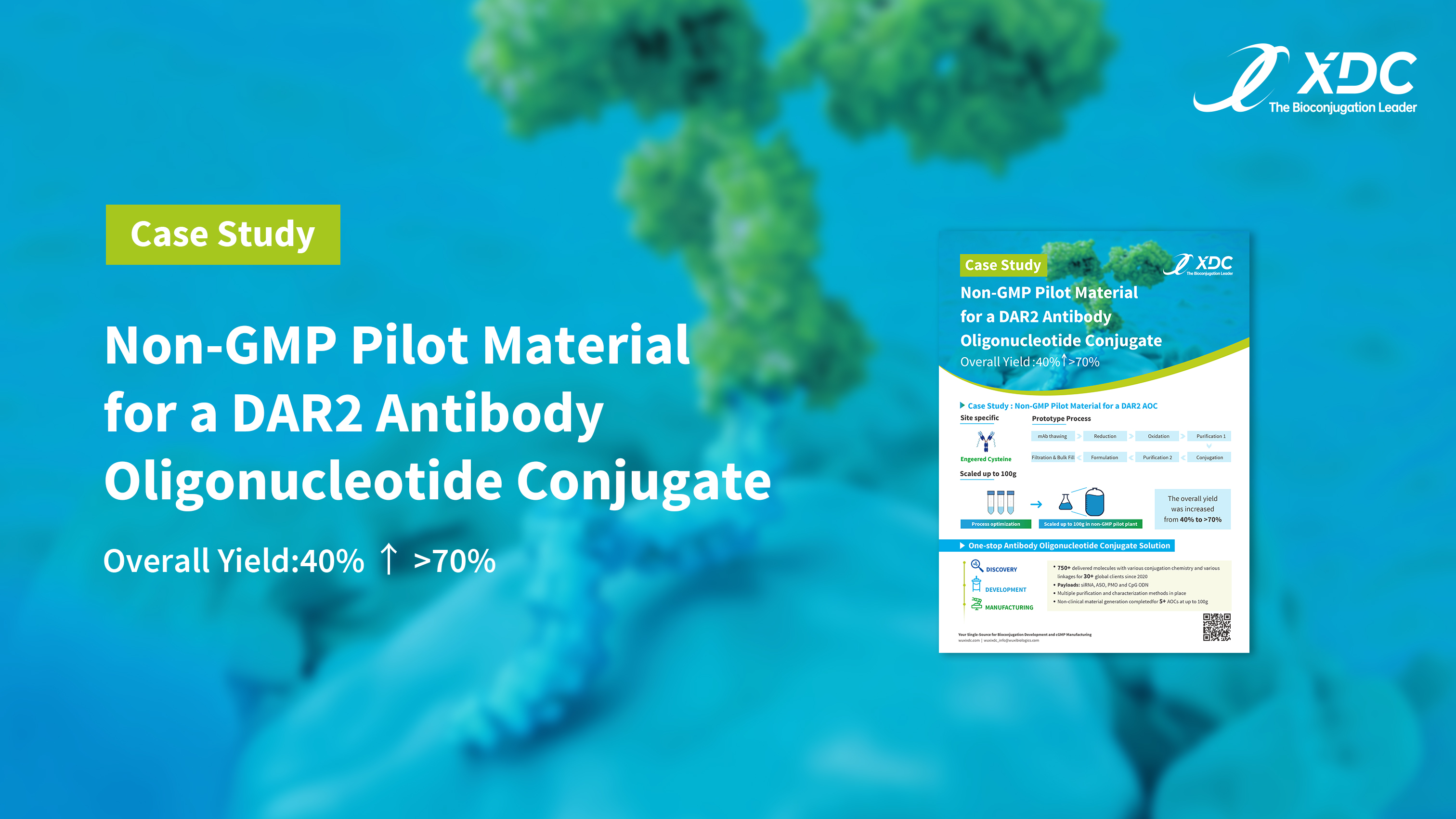
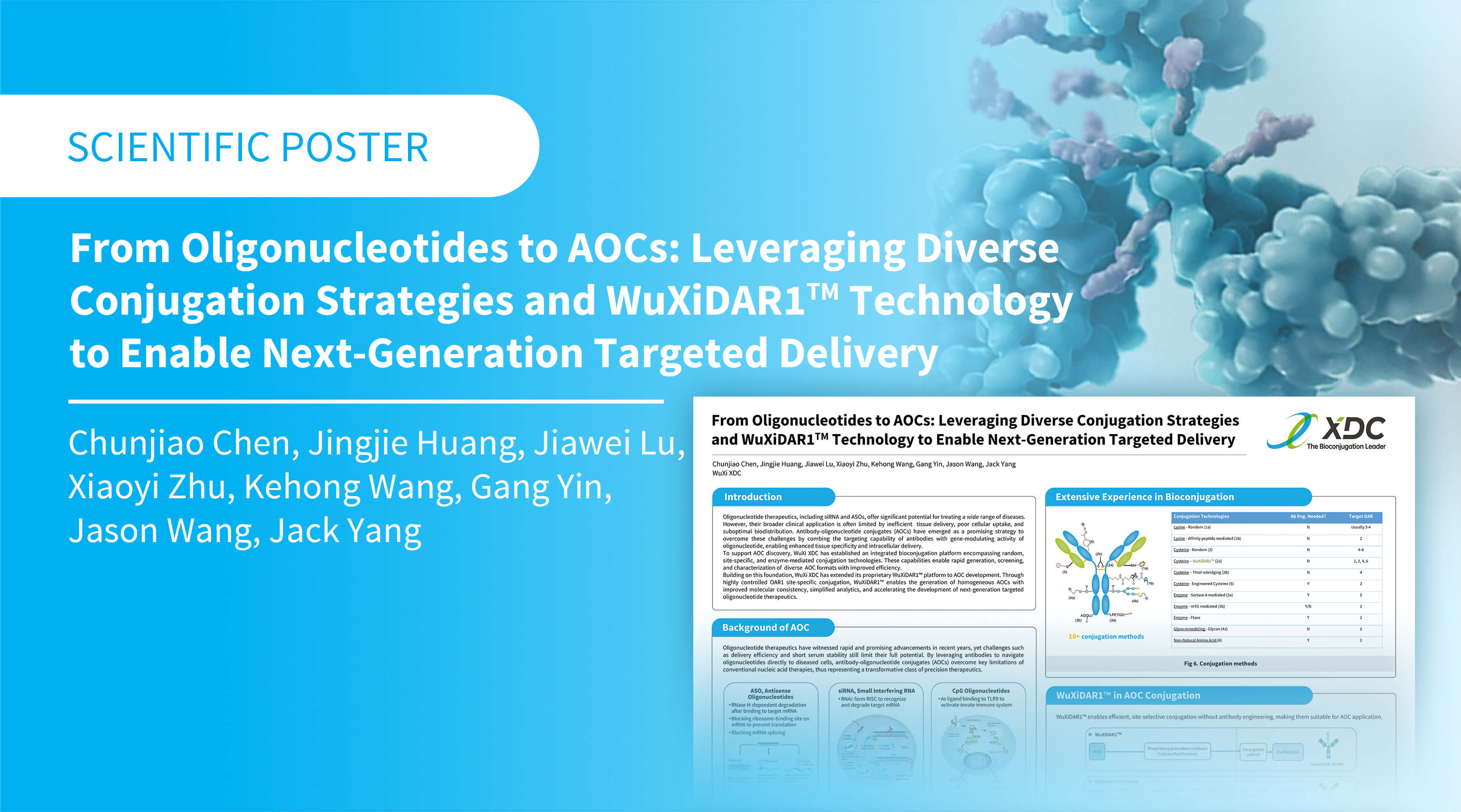
Precision site-specific conjugation enabled by the WuXiDARx™ platform delivers uniform OAR1 AOC constructs, eliminating the heterogeneity and suboptimal pharmacokinetic profiles commonly observed in high-loading AOC designs. By fixing payload stoichiometry and conjugation site, this technology reduces aggregation risk, simplifies analytical characterization, and enables consistent and reproducible molecular performance—directly solving molecular-level and manufacturability challenges. (Read the blog to learn more: Conjugation Strategy for AOCs: Driving Improved Developability )
Complementing precise conjugation, rational linker design addresses AOCs’ most critical biological bottleneck: inefficient intracellular delivery and endosomal trapping. Tunable linker stability and integrated endosomal escape strategies balance systemic stability with effective payload liberation inside target cells, maximizing oligonucleotide bioactivity while minimizing off-target liabilities. (Read the blog to learn more: Linker Design to Reduce Intracellular Oligonucleotide Trapping )
Rather than optimizing these components independently, an integrated discovery platform can enable more efficient design and screening, as well as accelerate the identification of promising AOC candidates.
Building on these molecular‑level solutions, the path to a competitive AOC pipeline requires these technologies to be scaled within a unified discovery‑to‑development ecosystem. This enables antibody, payload, linker and conjugation strategy to be optimized holistically across the full construct, accelerating translation from molecular concept toward mature, developable AOC candidates.
An Integrated AOC Discovery and Development Ecosystem
Successful AOC programs require coordinated expertise spanning:
- Antibody engineering
- Oligonucleotide design and synthesis
- Linker and conjugation technology
- Bioconjugation process optimization
- Advanced analytical characterization
- Pharmacokinetics and biodistribution
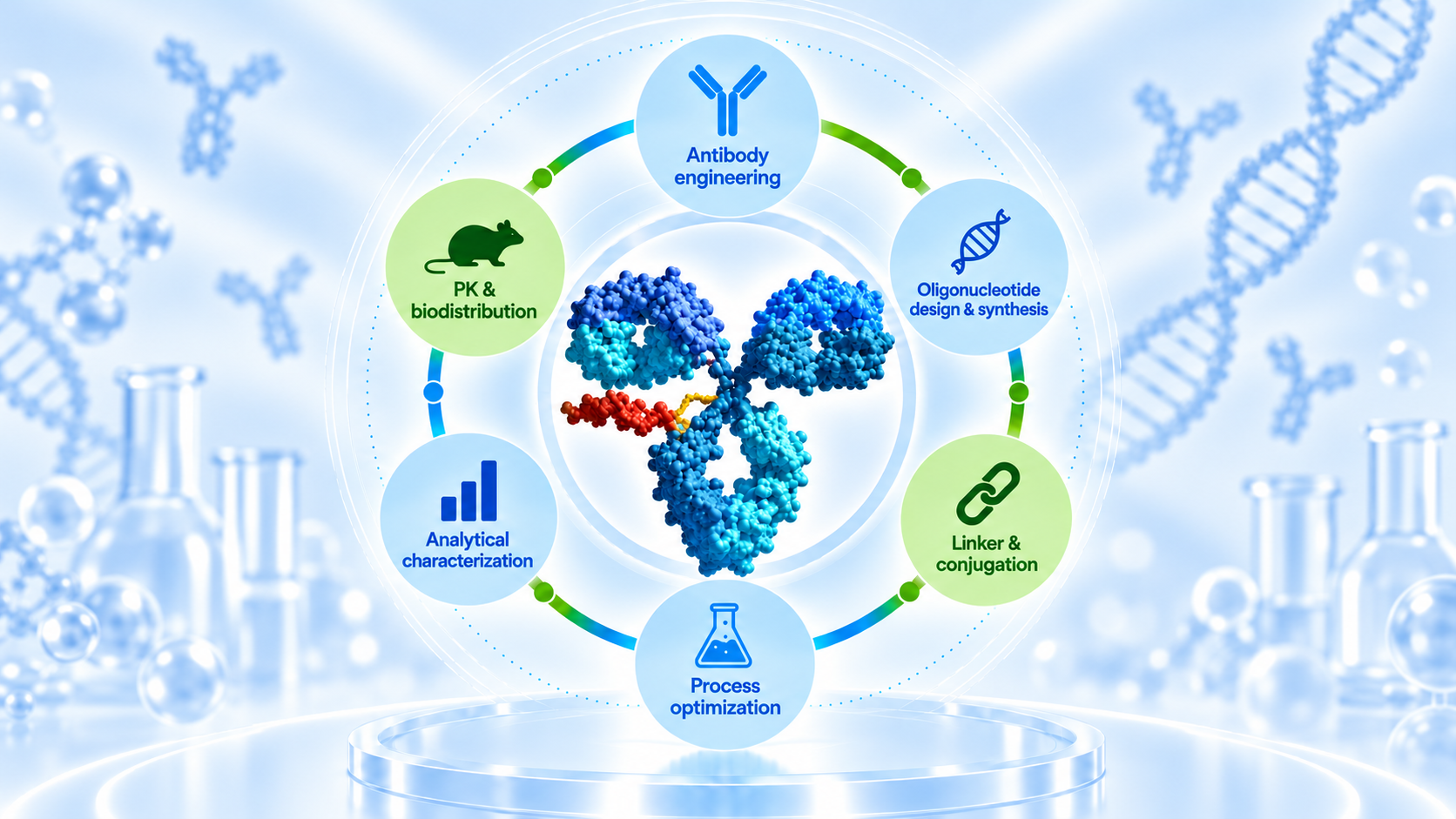
An Integrated Discovery and Development Ecosystem for AOCs
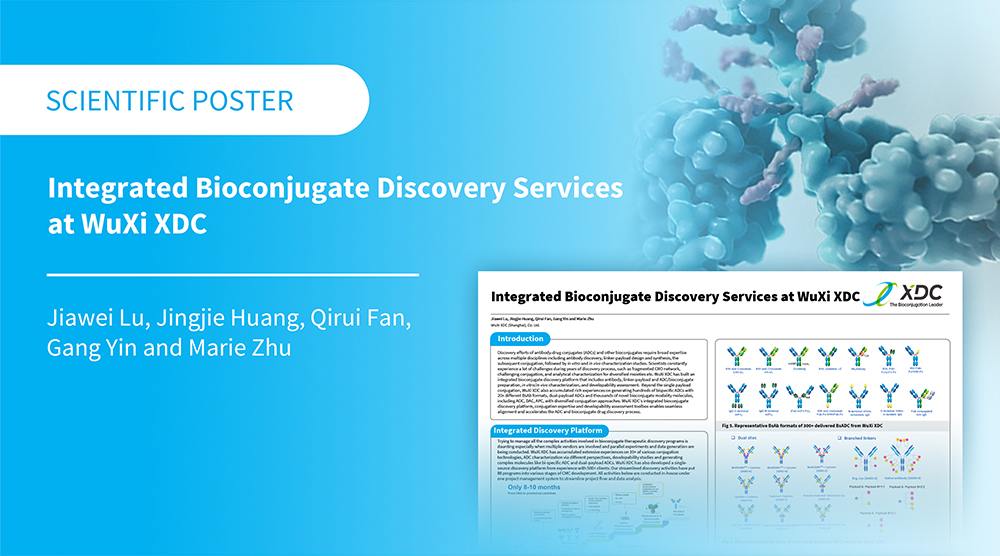
Building on its established ADC expertise, WuXi XDC is expanding its integrated AOC discovery capabilities to bring together oligonucleotide synthesis, antibody and bioconjugation expertise, precision conjugation technologies, analytical characterization, and biological evaluation within a coordinated workflow.
Component performances are tightly coupled within an AOC molecule: adjustments to one module often demand re‑optimization across others. An optimized oligonucleotide payload, for example, may require a different linker or conjugation strategy, while changes in conjugation site or loading may influence pharmacokinetics, cellular uptake, and overall biological activity. Bringing these capabilities together can facilitate more rapid iteration and help identify the optimal molecular configuration earlier in development.
Precision conjugation technologies such as WuXiDAR1 can serve as an important component of this ecosystem by enabling well-defined OAR1 molecules. Combined with broader discovery and development capabilities, this creates a platform for systematic evaluation and optimization of AOC candidates from early molecular design through candidate selection.
Ultimately, the combination of precision conjugation and integrated discovery capabilities may provide a more streamlined path for AOC development, reducing the need to coordinate multiple specialized platforms and enabling faster progression from molecular concept to optimized AOC candidate. For an emerging modality with highly interconnected biological, molecular, and manufacturing challenges, an integrated development ecosystem may be as important as any individual technology.
Browse our blog library → Expert Blog