By Dr. Jingjie Huang
Head of Payload Linker Discovery Service
About the Author
Dr. Jingjie Huang leads the Payload Linker Discovery Services department at WuXi XDC. With 10+ years’ deep expertise in medicinal chemistry focused on the preclinical development of novel small molecular drugs, she has successfully progressed 3 programs from early-stage SAR discovery through lead optimization and PCC nomination into clinical trials. She also has extensive experiences in hundreds of linker and payload discovery projects across diverse XDC modalities.
The design of linkers for AOCs is fundamentally driven by the mechanism of action (MOA) of the oligonucleotide and the need to achieve efficient intracellular delivery. Different payload modalities, including siRNA, ASO, and PMO, require access to distinct intracellular compartments, leading to different linker requirements in terms of stability, cleavage mechanism, and release kinetics. For example, siRNA payloads require efficient cytosolic release for RISC loading, whereas splice-switching oligonucleotides may place greater emphasis on intracellular trafficking and nuclear delivery. Therefore, linker design must be tailored to the specific biological pathway required for payload activity.
Unlike ADCs, where payload release is often required for activity, non-cleavable linkers generally have minimal impact on oligonucleotide efficacy in AOCs. Following receptor-mediated internalization, the antibody component undergoes lysosomal degradation, leaving the oligonucleotide attached to only a small linker-derived residual moiety. Given that the molecular weight of the linker is negligible relative to that of the oligonucleotide payload, this residual structure typically does not interfere with pharmacological activity.
In the case of siRNA-based AOCs, the linker is commonly attached to either the 5′ or 3′ terminus of the sense strand. Upon intracellular processing, the antisense (guide) strand, which is responsible for RNA-induced silencing complex (RISC) loading and target gene silencing, remains unmodified and fully functional. As a result, efficient gene knockdown can be achieved even when non-cleavable linker architectures are employed.
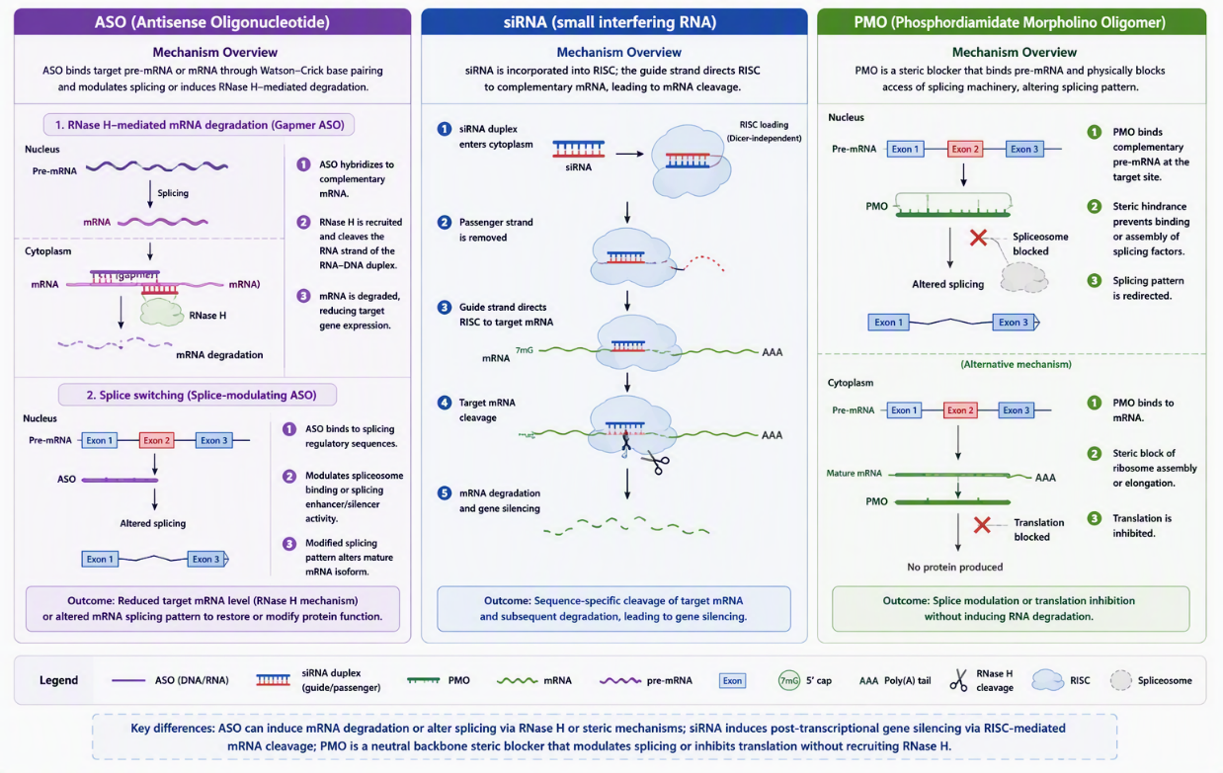
Mechanisms of Action of ASO, SiRNA, and PMO
A major challenge in AOC development is overcoming endosomal trapping following receptor-mediated internalization. Consequently, linker strategies are increasingly being optimized not only for intracellular payload release but also for facilitating endosomal escape. Approaches include pH-sensitive, redox-sensitive linkers that promote payload release within endosomal or cytosolic environments. In addition, dedicated endosomal escape enhancers such as cell-penetrating peptides, endosomolytic peptides, and small-molecule endosomal escape agents can be incorporated to improve cytosolic delivery and enhance pharmacological activity of oligonucleotides.
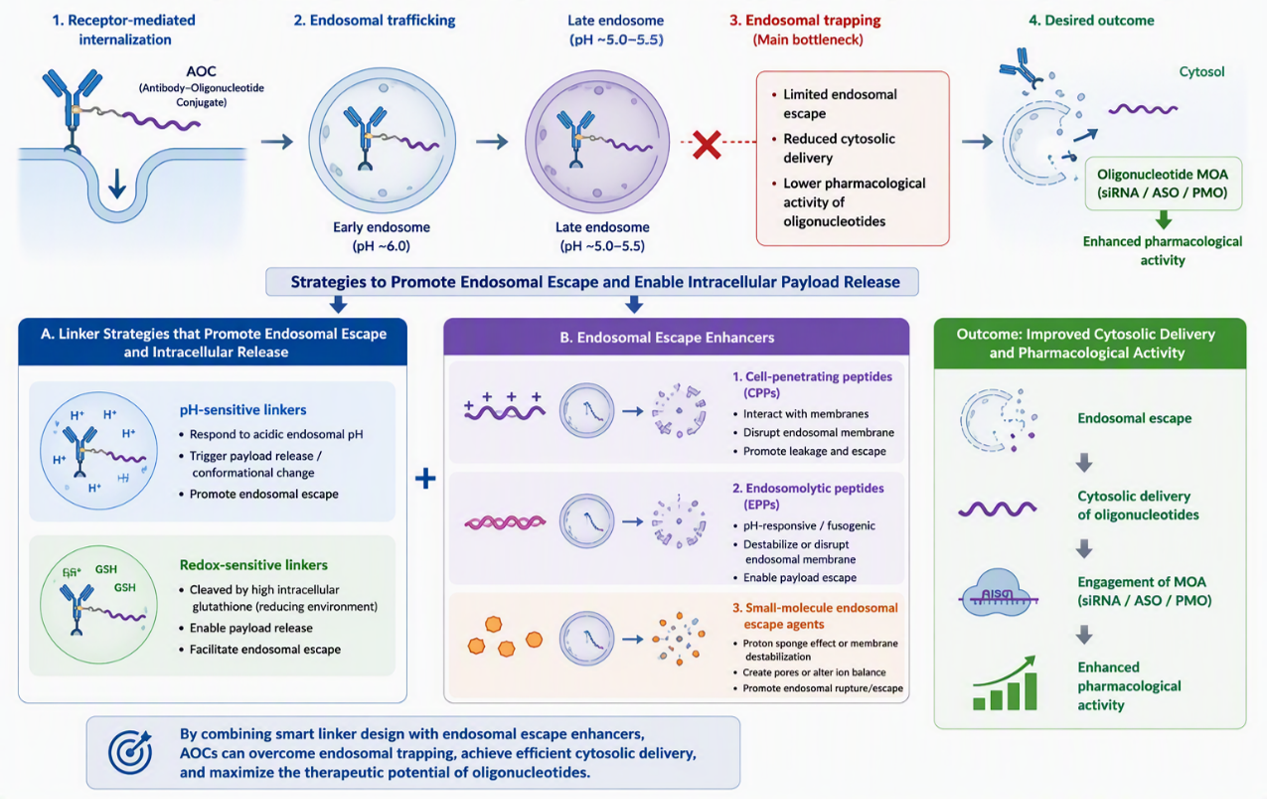
Linker Strategies to Promote Endosomal Escape and Enable Intracellular Payload Release
The key challenge in AOC linker design is balancing efficient endosomal escape with adequate stability in circulation. While increased intracellular release and endosomal escape can improve potency, chemical labile linkers or aggressive escape mechanisms may lead to premature payload release, reduced pharmacokinetic performance, and increased off-target toxicity. Conversely, highly stable linkers may exhibit excellent plasma stability but suffer from inefficient intracellular release and endosomal trapping. Therefore, the ideal AOC linker should remain stable during systemic circulation while enabling selective intracellular activation and efficient endosomal escape, ultimately maximizing therapeutic efficacy while maintaining a favorable safety profile.
WuXi XDC has accumulated extensive experience in AOC linkers, supporting a broad range of linker chemistries and connector technologies compatible with diverse conjugation strategies. Thio-rebridging connectors, such as bis-maleimides, are highly compatible with the WuXiDAR1 platform, enabling the generation of homogeneous DAR1 AOCs with well-controlled site-specific conjugation and improved product batch consistency.
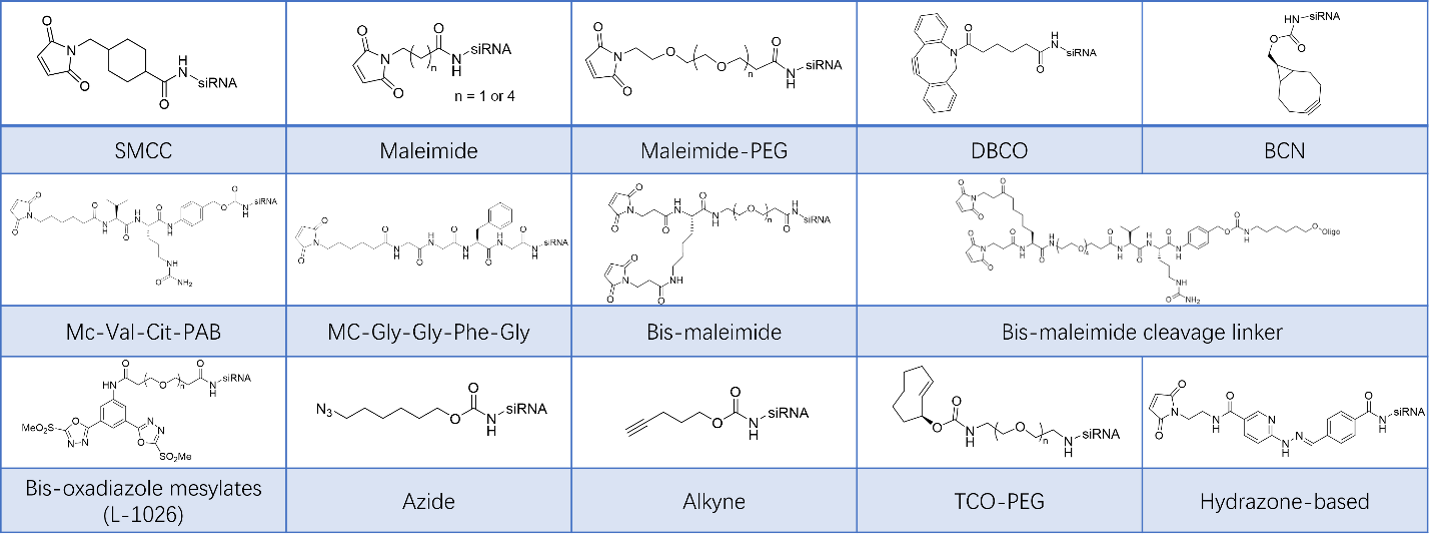
Extensive Experience in AOC Linkers at WuXi XDC
Browse our blog library → Expert Blog